

Best Carpet for Melbourne Bedrooms: Wool vs Synthetic in Our Climate
There is one room where carpet still beats every hard floor going, and that is the bedroom. In a Melbourne winter, stepping onto a cold slab or a chilly timber floor first thing in the morning is a small daily misery, and carpet fixes it. The real question is not whether to carpet a bedroom here, but which fibre suits our damp, cool-winter climate and your budget. After fitting bedrooms across Melbourne's northern and western suburbs from our Thomastown showroom, here is how we help people choose between wool and the synthetic options.
Why carpet still wins in a Melbourne bedroom#
Melbourne winters are cold and often damp. Homes on a concrete slab hold that chill, and even suspended timber floors feel cool underfoot from about May through September. Carpet with a good underlay traps a layer of warm air against the floor, so the surface you stand on in the morning is genuinely warmer than any tile, timber or hybrid board.
Carpet also does three quiet jobs that matter most in a bedroom:
- Warmth underfoot on cold mornings, which no hard floor matches.
- Acoustic softening — footsteps, voices and general noise are absorbed rather than bounced, so the room feels calmer and sleep comes easier.
- Comfort and safety for anyone getting up in the night, and a softer landing for young kids who fall out of bed.
Because bedrooms are low-traffic and stay dry, they are also the room where you can spend on comfort rather than heavy-duty wear. That opens the door to fibres that would be overkill in a hallway.
Wool: the natural premium choice#
Wool is the fibre most Melbourne homeowners fall in love with once they feel it. It is the benchmark for a reason.
What wool does well#
- Warmth and softness. Wool has natural loft and springs back, so it feels plush and warm underfoot — exactly what you want beside the bed on a July morning.
- Moisture regulation. This is the underrated one for our climate. Wool fibres can absorb and release moisture from the air without feeling damp, which helps a room feel less clammy through Melbourne's humid, damp winter spells.
- Natural flame resistance and low static. Wool is naturally harder to ignite and does not build up the static charge synthetics can.
- It ages gracefully. A quality wool carpet holds its look for years and resists the crushing that flattens cheaper fibres.
Where wool asks more of you#
- Price. Wool is the premium option and costs more per square metre than most synthetics.
- Stains. Natural wool is less stain-resistant than solution-dyed nylon out of the box, so it is not our first pick for a toddler's room where spills are constant — though it cleans well with prompt attention.
- Moths. Untreated wool can attract moths; most modern wool carpets are treated, but it is worth confirming.
For a main bedroom where comfort and a natural feel matter most, wool is often the right call. Many people also choose an 80/20 wool blend (80% wool, 20% nylon) to get most of wool's warmth and feel with a lift in durability and stain resistance at a lower price.
Solution-dyed nylon: the tough all-rounder#
Solution-dyed nylon (SDN) is our most popular synthetic for bedrooms that see harder use — kids' rooms, guest rooms, and homes with pets.
The word "solution-dyed" is the key. The colour is locked into the fibre as it is made, rather than dyed onto the surface afterwards. That means the colour runs all the way through, so SDN resists fading and stands up to cleaning with strong products without losing colour. It is durable, springs back well, and cleans up easily.
For a Melbourne family, SDN gives you a carpet that feels soft enough for a bedroom but shrugs off the spills, stains and traffic that would tire out a cheaper fibre. It sits below wool on feel and natural warmth, but it is the sensible middle ground for most homes.
Polyester (PET) and triexta: soft and stain-resistant on a budget#
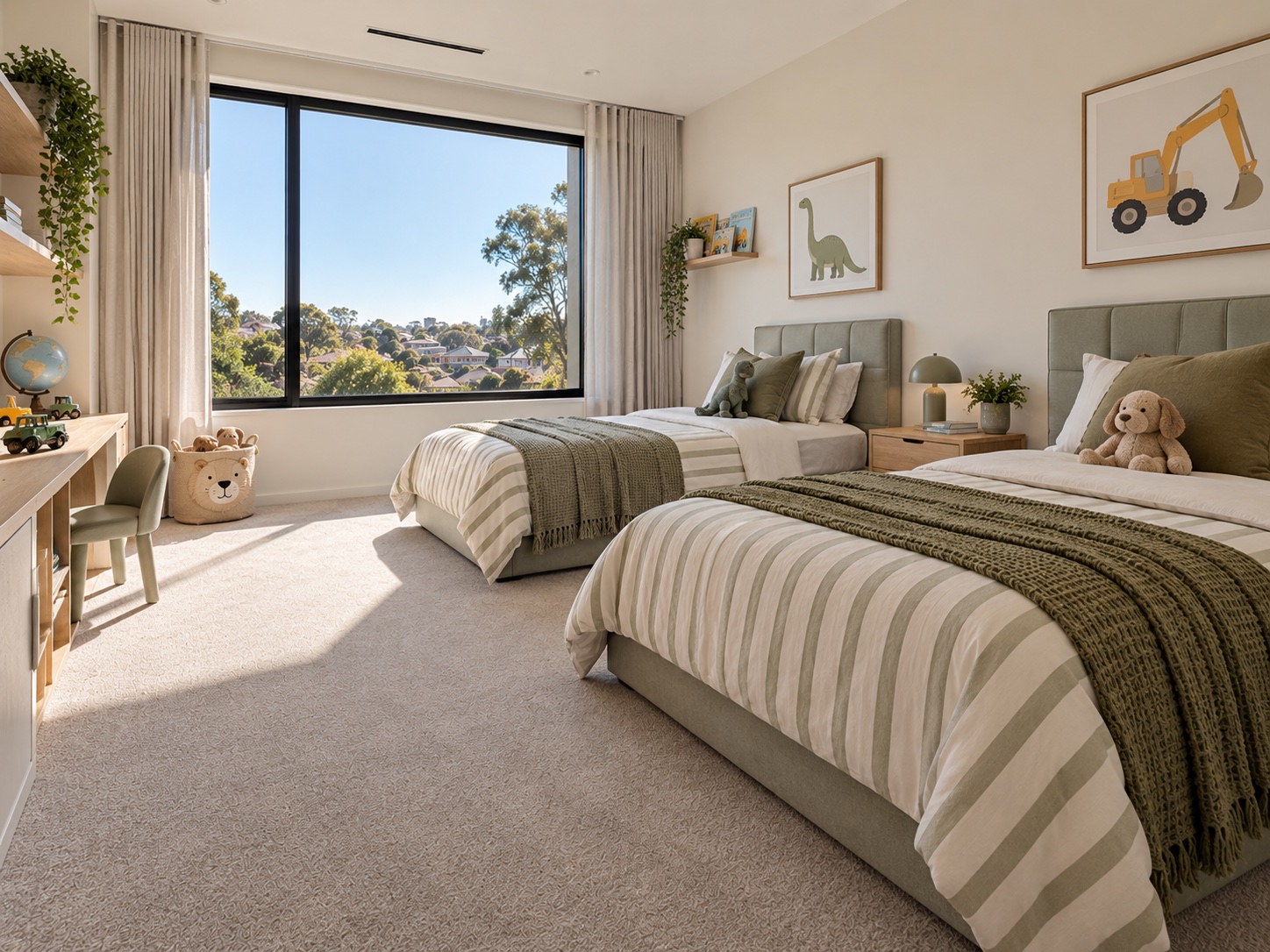
The polyester family covers a few fibres worth knowing:
- Polyester / PET is prized for being extremely soft and naturally stain-resistant, often at the lowest price. The trade-off is that it can flatten and lose its spring faster under traffic, so it is best kept to genuinely low-use bedrooms — a spare room, a study-bedroom, or a rarely used guest room.
- Triexta is a newer polyester-type fibre that keeps the softness and built-in stain resistance but adds much better resilience and bounce-back than standard PET. It is a strong pick for a kids' bedroom where you want softness, spill resistance and a friendly price without the flattening.
If your budget is tight and the room is quiet, a good triexta gives you a soft, forgiving, stain-resistant bedroom carpet that punches above its price.
Cut pile, twist and pile density — reading the label#
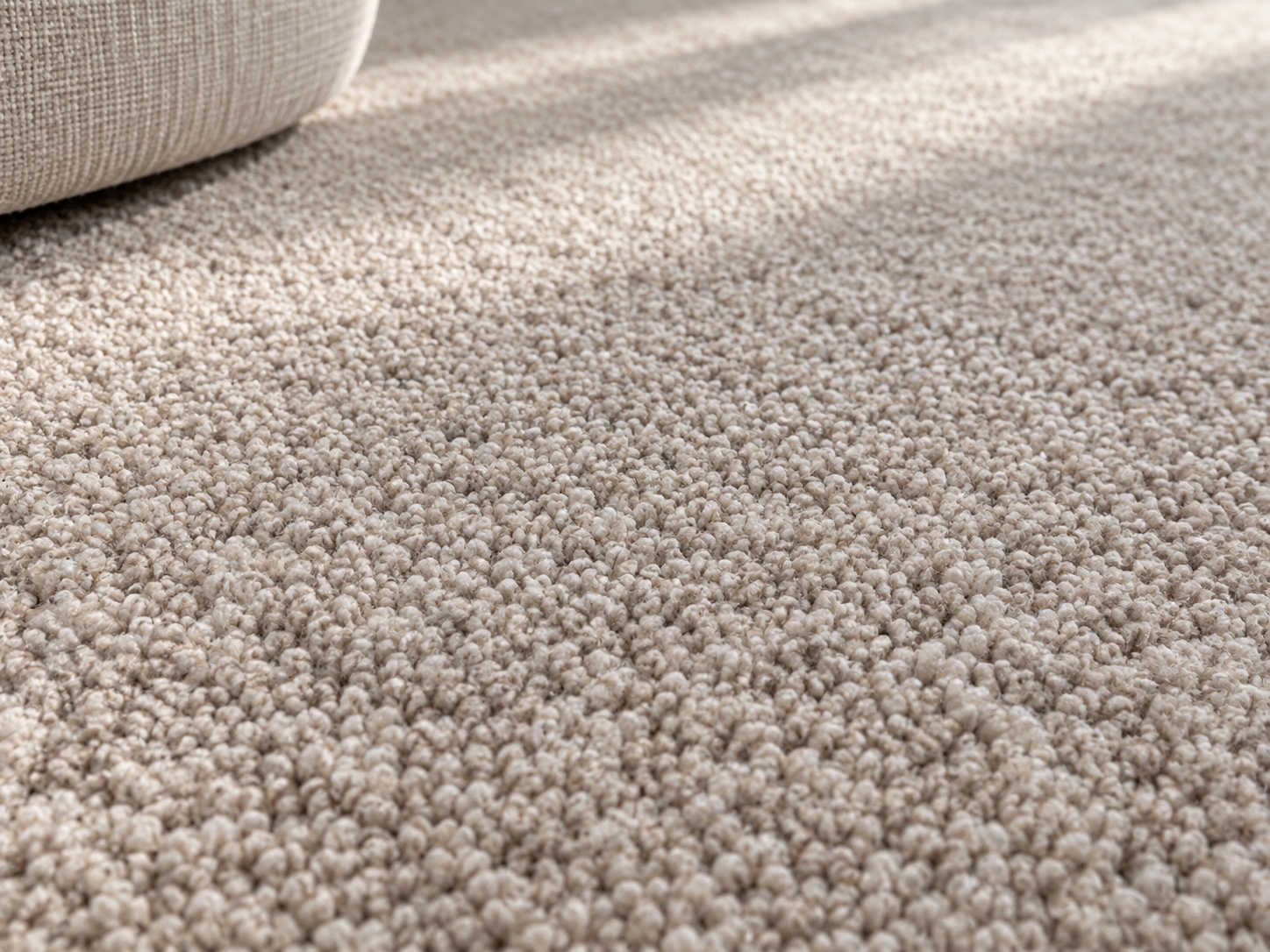
Fibre is only half the story; how the carpet is built matters just as much.
- Cut pile (yarn tips cut open) is the classic soft, plush bedroom surface. A twist or plush twist cut pile is the usual bedroom choice — soft underfoot and forgiving.
- Loop pile (uncut loops) is tougher and better suited to hallways and stairs than a bedroom, where you want softness.
- Face weight and pile density tell you how much yarn is packed in. A denser, heavier pile feels more luxurious and resists flattening, so if you press your fingers into a sample and the backing is easy to see, expect it to crush sooner.
For bedrooms, lean toward a soft twist cut pile with a decent density. You do not need a commercial-grade heavy loop in a room you walk through in socks.
Allergies and asthma — the honest answer#
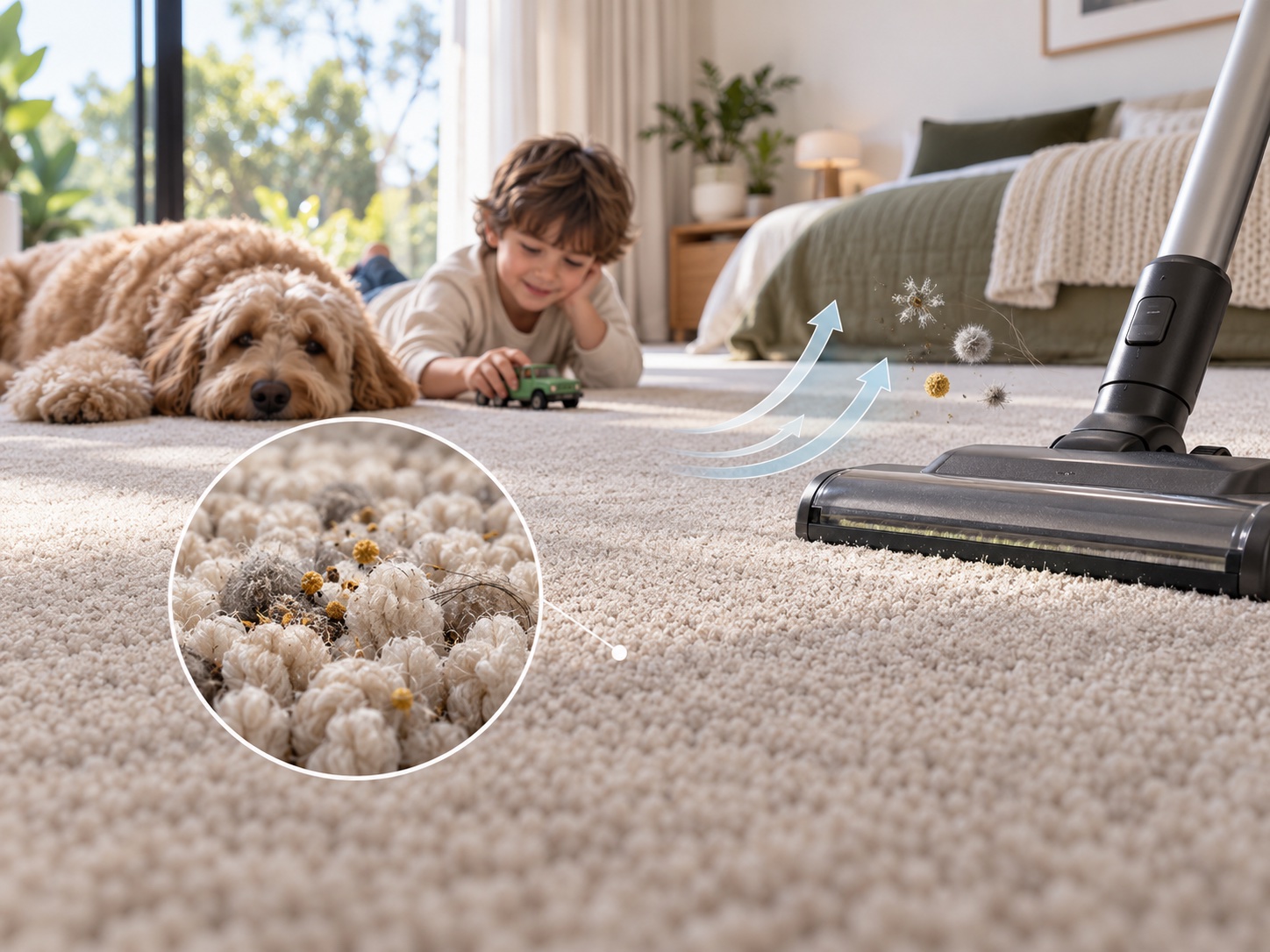
A common myth is that carpet is bad for asthma and allergies. The current thinking is more balanced. Carpet actually traps dust, pollen and pet dander in the pile and holds it out of the air you breathe, whereas hard floors let those particles lift and circulate every time someone walks past. The key is a regular vacuum with a HEPA filter to remove what the carpet has trapped. For sensitive households we lean toward low-VOC carpets and quality underlay, and short, dense piles that are easy to vacuum thoroughly.
Do not skip the underlay#
The underlay is the layer under the carpet that most people never think about, and in Melbourne it is doing real work. A good underlay:
- Adds warmth by insulating against a cold slab or floorboards.
- Adds comfort — a lot of that luxurious "soft" feeling underfoot is the underlay, not just the carpet.
- Extends carpet life by cushioning the fibres from being crushed against the floor.
For a bedroom we usually recommend a thicker, higher-density foam or rubber underlay than you would use in a hallway. It is a small extra cost that transforms how the finished floor feels and how long it lasts. Spending a little less on the carpet and a little more on the underlay is often the smarter split for a bedroom.
Our recommendations by budget#
- Premium: A quality wool cut pile with a thick underlay. The warmest, most natural feel for a main bedroom in a cold Melbourne home.
- Mid-range: An 80/20 wool-nylon blend, or a good solution-dyed nylon twist. Warmth and comfort with better stain resistance and durability for family rooms.
- Budget: A soft triexta cut pile with the best underlay you can afford. Soft, forgiving and stain-resistant for spare rooms, kids' rooms and rentals.
Whatever the budget, the underlay is where we would never cut corners in a bedroom.
Related guides#
For more Melbourne flooring guidance, read how to choose carpet color, Choice Carpet, and Choosing Carpet for Melbourne Stairs & Hallways. Ready to plan your floor? Book a free measure and quote.
Frequently Asked Questions#
Is wool carpet worth the extra cost in a Melbourne bedroom?#
For a main bedroom, often yes. Wool's natural warmth, moisture regulation and soft feel are exactly what a cold, damp Melbourne winter calls for, and it holds its look for years. If the budget is tight or the room is a busy kids' space, an 80/20 wool blend or solution-dyed nylon gets you most of the way for less.
Which carpet is best if someone in the house has asthma?#
Choose a short, dense pile that is easy to vacuum thoroughly, pair it with a low-VOC carpet and quality underlay, and vacuum weekly with a HEPA-filter machine. Carpet traps allergens in the pile rather than letting them circulate, so with regular cleaning it can suit allergy-prone households.
How thick should bedroom underlay be?#
Thicker and denser than a hallway. A good foam or rubber underlay adds warmth against a cold slab, boosts the soft feel underfoot, and makes the carpet last longer. It is a small extra cost that changes how the whole floor feels — we would never skip it in a bedroom.
Will carpet feel cold on a concrete slab?#
Not with the right underlay. Carpet plus a good insulating underlay traps a warm air layer against the slab, so the surface you stand on stays far warmer than tile, timber or hybrid ever will. This is exactly why carpet remains the go-to bedroom floor in Melbourne.
Talk to Mr Floor about your bedrooms#
The best way to choose bedroom carpet is to feel the fibres and the underlays in person, so come and walk the samples at our Thomastown showroom at 216 Settlement Rd, or book a free measure and quote and we will bring the range to you. We cover Melbourne's northern and western suburbs, and we will steer you to the right balance of warmth, comfort and durability for your home and budget. Explore our full carpet range, then call us on (03) 9961 4792 to get started.
Last updated: 22 June 2026
Flooring expert at Mr Floor Melbourne.