

Hybrid Herringbone vs Timber Herringbone for Melbourne Homes
Both hybrid herringbone and engineered timber herringbone give you that stunning angled parquetry look — but they are very different floors underneath, and the right one depends on the room, your budget, and your household. Hybrid is waterproof, cheaper, and easier to click together. Timber is real oak, richer to the touch, and can be re-sanded years down the track. This honest head-to-head will help you pick the one that suits your Melbourne home.
What each floor actually is#
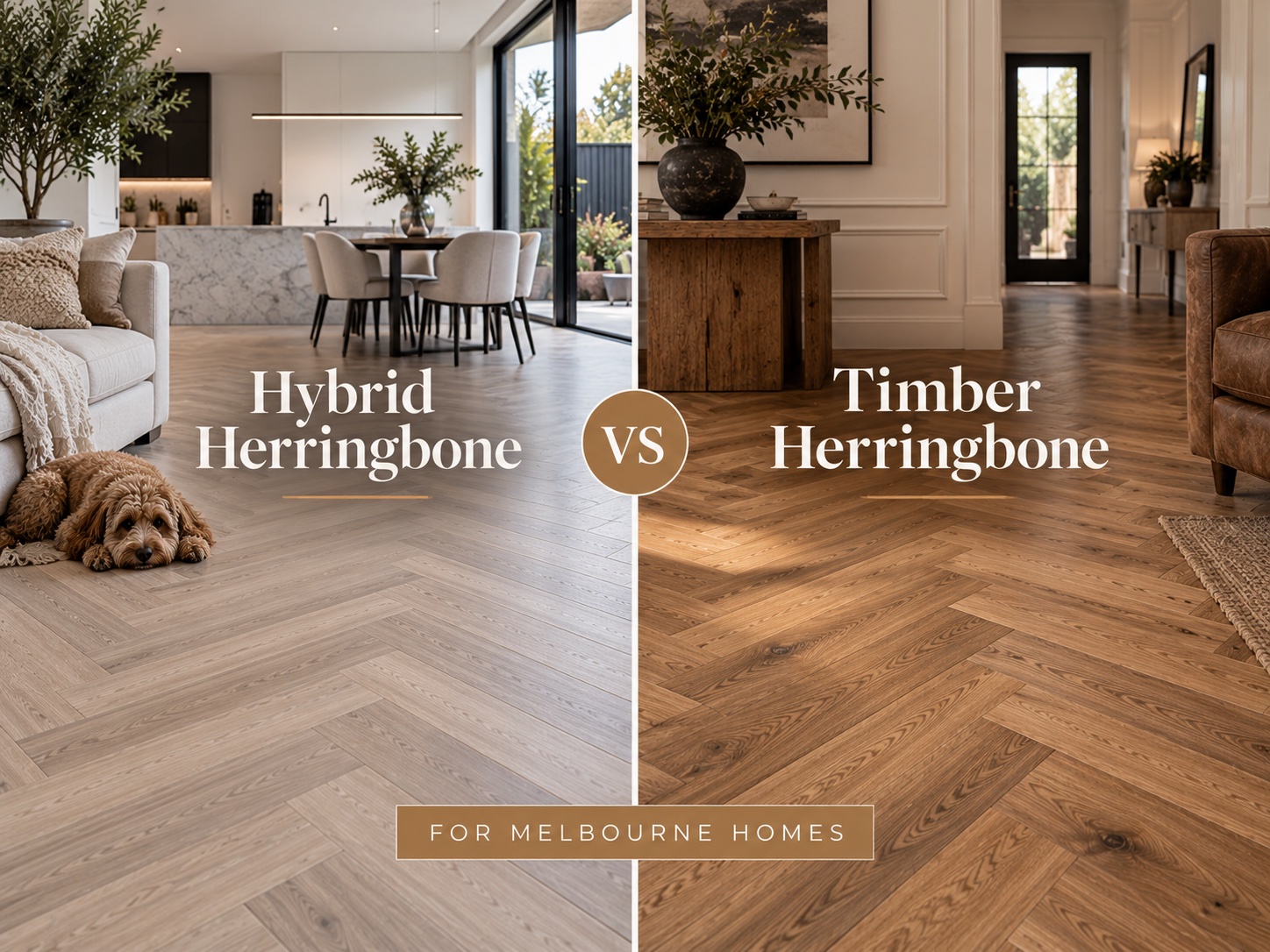
The word "herringbone" only describes the lay pattern. The board can be one of two very different things:
- Hybrid herringbone is a rigid SPC (stone plastic composite) board with a printed timber-look layer and a clear wear layer on top. It clicks together as a floating floor and is 100% waterproof through its core.
- Timber herringbone is real engineered timber — a genuine oak top layer bonded to a stable plywood or HDF base. It has a natural wood surface, natural grain, and it can usually be re-sanded and re-coated once or twice over its life.
Same beautiful pattern; two completely different materials. Here is how they compare on the things Melbourne homeowners actually care about.
Water resistance#
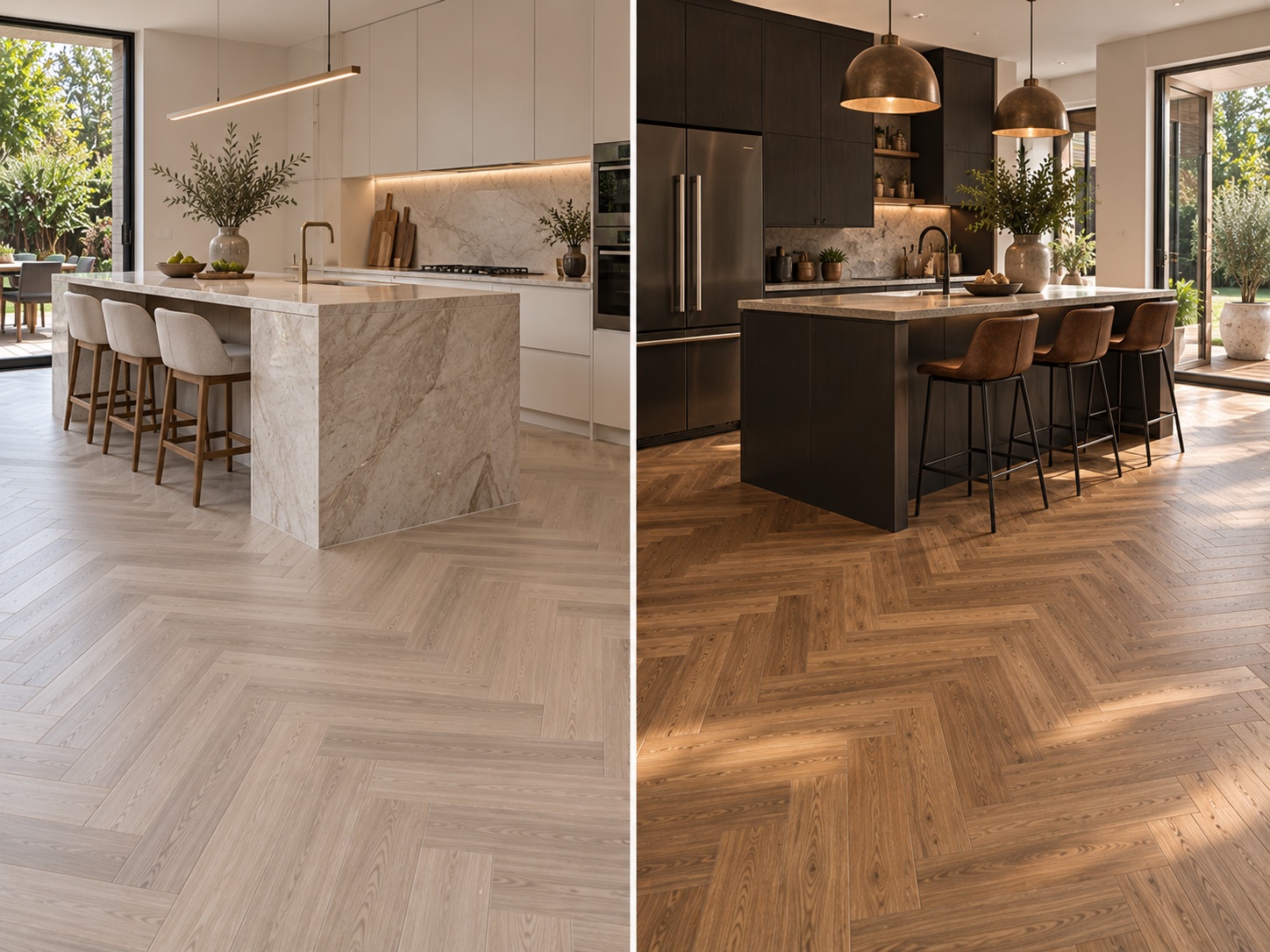
This is often the deciding factor.
- Hybrid herringbone is 100% waterproof. Spills, mopping, a leaking dishwasher, wet dog paws — none of it swells the board. That makes it the safe choice for kitchens, open-plan living-dining, laundries, and homes with kids and pets.
- Timber herringbone is not waterproof. Real oak can swell, cup, or stain if water sits on it. It handles a quickly wiped spill fine, but it is not for wet areas and needs more care around the kitchen sink and entry doors.
For a busy Melbourne family home with an open-plan kitchen flowing into the lounge, waterproofing alone pushes many people toward hybrid.
Cost#
- Hybrid herringbone is the value winner. Supply-and-installed generally sits well below timber, which is why it is our most popular herringbone for families watching the budget.
- Timber herringbone is a premium floor. Real oak, plus the extra subfloor prep and glue-down labour it often needs, puts it at the top end. It is an investment — but a genuine one that many period-home owners in Melbourne happily make.
Whichever you choose, remember the herringbone pattern itself adds labour and cutting waste over a straight-lay floor, so both cost more per square metre than the same board laid straight.
Look and feel underfoot#
- Timber herringbone wins on authenticity. It is real wood, so every board is slightly different, the grain has genuine depth, and it feels warm and solid underfoot. Brushed and oiled oak finishes have a texture no print can fully match. In a heritage Melbourne home, nothing reads quite like the real thing.
- Hybrid herringbone looks excellent — modern printing and embossing are very convincing, and from standing height most visitors cannot pick it. Underfoot it feels firmer and a little cooler than timber because of the stone core.
If you run your hand and eye over both in our showroom, timber feels more "alive"; hybrid feels tougher and more consistent.
Durability and repair#
- Hybrid shrugs off scratches, dents, dragged furniture, and pet claws better than timber thanks to its hard wear layer and stone core. If a board is ever damaged, a fitter can swap out that block. It cannot be sanded, though — once the wear layer is gone, that board is replaced.
- Timber scratches and dents more easily than hybrid, but it has a trick hybrid does not: it can be re-sanded and re-coated. A tired timber herringbone floor can be brought back to look new, which extends its life for decades. That refinishing ability is the classic argument for real oak.
So hybrid resists damage better day to day; timber can be renewed when it eventually wears.
Installation#
- Hybrid herringbone clicks together as a floating floor over most sound existing floors. It is quicker to lay, more forgiving, and friendlier for a confident DIY homeowner — though the angled pattern is still trickier than straight-lay and a professional install gives the cleanest result.
- Timber herringbone is usually glued down to a properly prepared, level subfloor. That is more work, needs more skill, and is not a DIY job. Melbourne's uneven period subfloors often need levelling first, which adds to the timeline.
Comfort, warmth, and noise#
- Timber feels warmer underfoot and works beautifully with underfloor heating (within the maker's limits). It has a natural, softer acoustic.
- Hybrid feels firmer and cooler, but a good acoustic underlay layer handles footstep noise well — handy in two-storey townhouses and apartments with body-corporate noise rules.
Which one suits which Melbourne home?#
Here is how we usually guide clients from the northern and western suburbs.
Choose hybrid herringbone if you...#
- Have kids, pets, or a busy household and want a floor that copes with real life.
- Want the pattern in a kitchen, open-plan living-dining, or anywhere water is a risk.
- Are working to a sensible budget and want the best look for the money.
- Are floating over an existing sound floor and want a faster, cleaner install.
- Own a rental or investment property and want waterproof, low-maintenance, and fast to lay.
Choose timber herringbone if you...#
- Own a period Melbourne home — a Victorian or Edwardian terrace, a bungalow — where real oak suits the heritage.
- Want the genuine warmth, grain, and feel of real wood underfoot.
- Value being able to re-sand and refresh the floor decades from now.
- Are laying in living and bedroom areas away from water.
- Have the budget for a premium, long-term investment floor.
Many Melbourne renovators end up with hybrid herringbone through the wet, busy heart of the home and save timber herringbone for a formal lounge or main bedroom — the best of both worlds.
Related guides#
For more Melbourne flooring guidance, read Melbourne Parquetry Finishes and Herringbone Flooring. Ready to plan your floor? Book a free measure and quote.
Frequently Asked Questions#
Is hybrid herringbone as good as real timber herringbone?#
They are good at different things. Hybrid is waterproof, tougher against scratches, cheaper, and easier to install. Timber gives you a genuine oak surface, more warmth and depth, and the ability to re-sand it later. For durability and water resistance, hybrid wins; for authenticity and long-term renewability, timber wins.
Can hybrid herringbone go in a kitchen?#
Yes — this is one of its biggest advantages. Because hybrid is 100% waterproof through its core, it is well suited to kitchens, open-plan living-dining, and even laundries, where real timber herringbone would be at risk from spills and moisture.
Which herringbone is better for a Melbourne period home?#
For a Victorian or Edwardian home, engineered timber herringbone in oak usually suits the heritage look best and can be re-sanded to last generations. If the home has an open-plan renovated kitchen and living area, hybrid herringbone is a smart, waterproof choice for those busier zones.
Is timber herringbone worth the extra money?#
If you want a real wood floor, love the natural feel underfoot, and want the option to refinish it in twenty years, then yes. If your priorities are waterproofing, scratch resistance, a busy household, or a tighter budget, hybrid herringbone gives you the same striking pattern for less.
Compare both herringbone floors at Mr Floor Melbourne#
The best way to choose is to see and feel both in person. Visit our showroom at 216 Settlement Rd, Thomastown VIC 3074 to compare hybrid and engineered timber herringbone side by side, or book a free measure and quote and we will bring samples to your Melbourne home and check your subfloor. Call us on (03) 9961 4792 and we will help you pick the herringbone that suits your rooms, your household, and your budget.
Last updated: 18 June 2026
Flooring expert at Mr Floor Melbourne.