

Best Herringbone Colours & Lay Directions for Melbourne Living Rooms
Herringbone can make a Melbourne living room feel warm and grand or cool and calm — and the two choices that decide which way it goes are the colour of the boards and the direction you run the point. Get those right for your room's light and size and the floor sings. Get them wrong and even a beautiful board can feel busy or flat. Here is how we guide clients through both decisions in our Thomastown showroom, room by room.
First understand the pattern before you pick#
Herringbone is a lay pattern, not a timber species. You can have it in hybrid herringbone for full waterproofing on a budget, or in real engineered timber with a genuine oak surface for the top-end look. Colour and direction work the same way in both, so the design advice below applies whichever product you land on.
Two things about the pattern change how colour reads:
- The angled joints catch light from two directions at once. That is why herringbone always looks richer and more three-dimensional than a straight floor — but it also means colour and sheen matter more.
- Block size changes the scale of the pattern. A small block reads as fine and busy; a large block reads as bold and calm. We will come back to this under room size.
Match the colour to your room's light aspect#
Melbourne living rooms face every direction, and the aspect changes how a floor colour looks all day. This is the single biggest thing people forget.
North and west-facing rooms (warm, bright light)#
North and west-facing lounges get strong, warm afternoon light — common in the newer estates out west in Hoppers Crossing and Werribee, and in renovated homes across Essendon and Ivanhoe. That warm light pushes timber colours warmer, so a honey or golden oak can start to look orange by late afternoon. In these rooms we usually steer clients toward:
- Neutral to cool-toned oaks that stay balanced under warm light.
- Mid browns and greige (grey-beige) tones that hold their colour all day.
South and east-facing rooms (cool, soft light)#
South-facing rooms and the flat cool light common in older Coburg, Preston, and Reservoir homes make everything read a touch cooler and darker. Very grey or very dark boards can feel cold and heavy here. These rooms come alive with:
- Warm, mid-tone oaks that add the warmth the light is missing.
- Natural and lightly smoked oak finishes that keep the room feeling bright.
The rule of thumb: let the floor balance the light, not echo it. Warm room, cooler floor. Cool room, warmer floor.
Light boards vs dark boards#
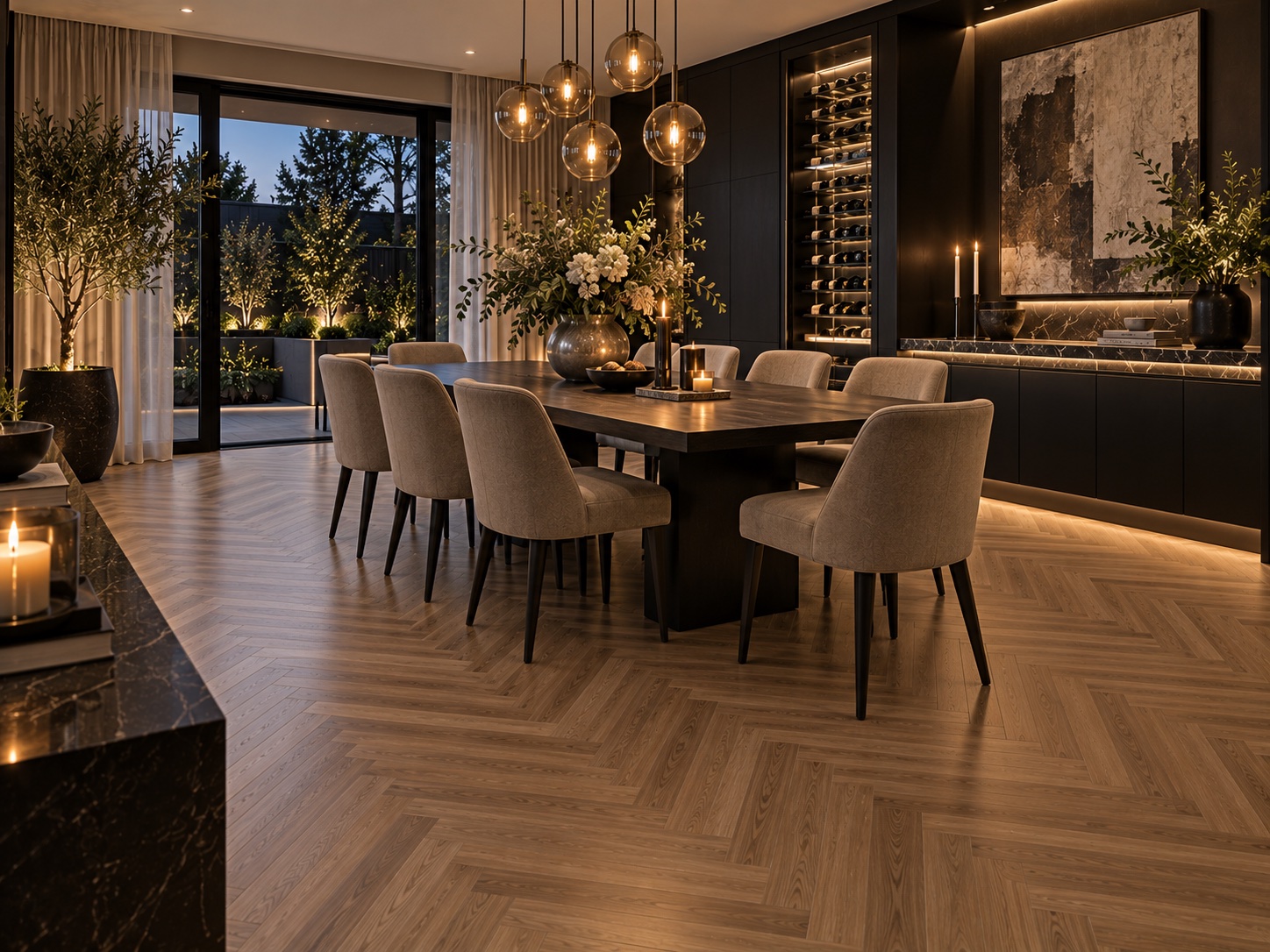
Colour depth changes how big and how formal the room feels.
- Light oak and pale herringbone open a room up, hide dust and fine scratches, and suit modern, coastal, and Scandinavian interiors. Great for smaller Melbourne living rooms and apartments where you want space and calm.
- Dark and smoked herringbone feels rich, formal, and dramatic. It frames period features beautifully but shows dust, hair, and footprints more, so it needs a bit more upkeep. It suits larger rooms with plenty of natural light.
- Mid-tone oak is the safe, forgiving middle ground — it hides wear, suits most furniture, and works in both period and modern homes. It is the most-chosen colour in our showroom for good reason.
If you have kids, pets, or a busy household, a mid-tone with visible grain hides day-to-day life far better than a flat pale or a glossy dark board.
Which direction should the point run?#
The "point" is the V that the herringbone forms. Which way you aim it changes how the room feels, and there is no single right answer — but there are strong conventions we lean on.
Run the point toward the main light source or entry#
The most common and most flattering choice is to aim the point toward the window or the main entry to the room. As you walk in, the pattern draws your eye forward and the angled joints catch the incoming light, giving that rich, three-dimensional shimmer. In a Melbourne lounge with a big north-facing window, pointing the herringbone at that window makes the whole floor glow in the afternoon.
Run the field down the length of the room#
In a long, narrow living or dining space — think a classic Northcote or Fitzroy terrace — running the overall herringbone field down the length of the room helps the space feel longer and more resolved. The eye travels naturally along the run.
Keep it consistent through open-plan zones#
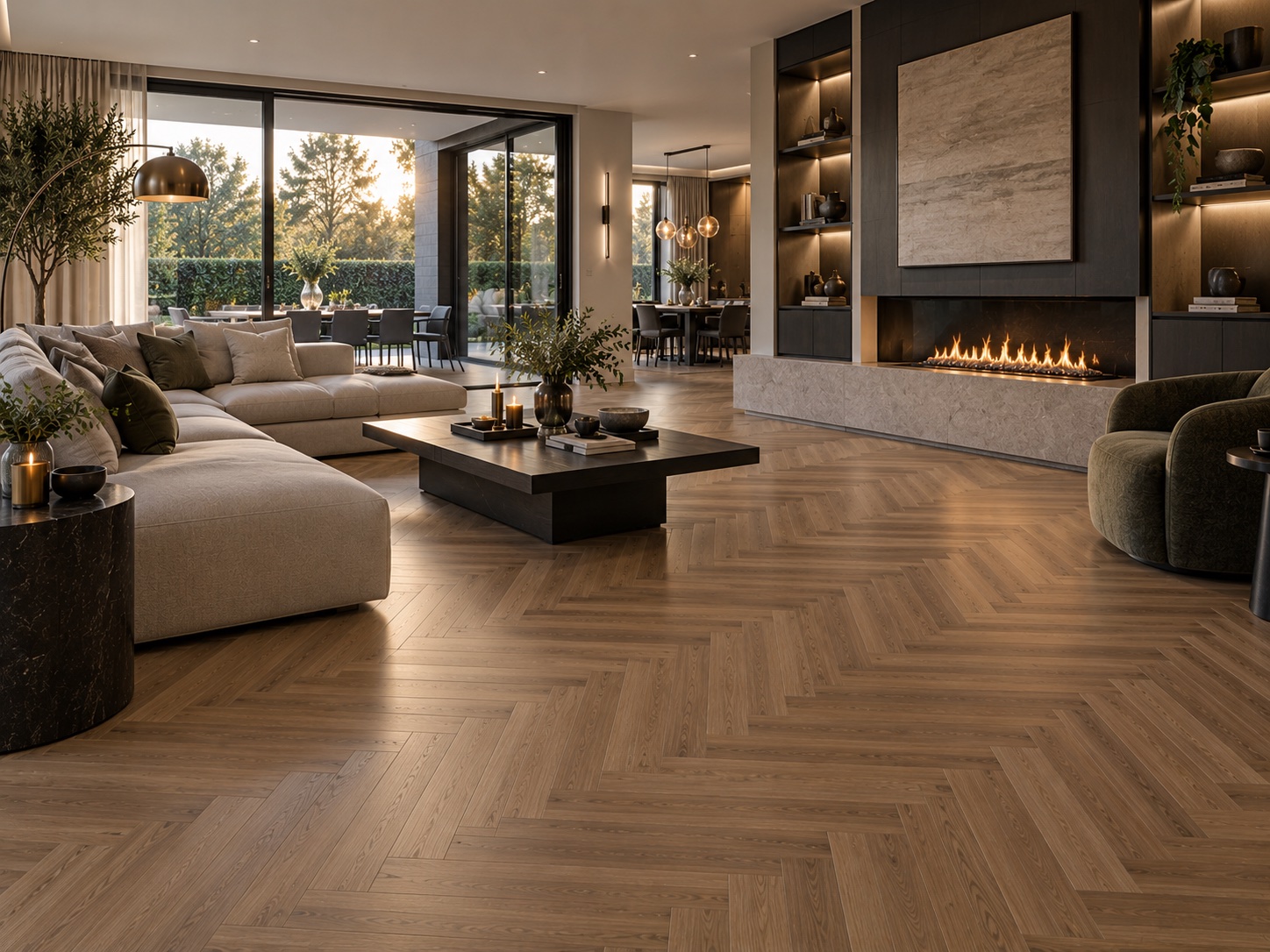
Modern open-plan renovations in Doncaster and out west often flow from lounge to dining to kitchen. Pick one direction and carry it through the whole zone. Changing direction between areas chops the space up and makes it feel smaller. One continuous run reads as calm, expensive, and deliberate.
Block size: match the scale to the room#
Block size is the quiet decision that makes or breaks the look.
- Small blocks create a fine, detailed, traditional pattern. They suit smaller rooms, hallways, and period homes — but in a big open lounge they can look busy.
- Large blocks read as bold, modern, and calm. They suit large open-plan Melbourne living rooms and let a beautiful oak grain show. In a tiny room, though, you may only fit a few full blocks and lose the pattern.
- Mid-size blocks are the all-rounder — enough detail to be interesting, enough scale to feel modern, and they suit most Melbourne rooms.
For a small living room, a light-coloured mid or large block, laid in one clean direction, makes the space feel bigger. For a grand period lounge, a smaller darker block with a border leans into the heritage look.
Matching period vs modern Melbourne interiors#
- Period homes (Victorian and Edwardian terraces, California bungalows): lean warmer and richer. Smaller-to-mid blocks, a mid-to-dark oak, and often a border framing the field suit the era beautifully. This is where engineered oak herringbone really shines.
- Modern renovations and new builds: lean cleaner and calmer. Larger blocks, a pale-to-mid neutral oak, a matte finish, and no border give that contemporary, understated look. Hybrid herringbone covers this off at a friendlier price.
Related guides#
For more Melbourne flooring guidance, read What Is Herringbone Flooring, Melbourne Parquetry Finishes, and Is Herringbone Flooring Good for Small Spaces. Ready to plan your floor? Book a free measure and quote.
Frequently Asked Questions#
What is the most popular herringbone colour in Melbourne?#
Mid-tone natural oak is the runaway favourite. It suits both period and modern homes, hides everyday wear, works with almost any furniture, and stays balanced under Melbourne's changing light. Pale oak is a close second for modern renovations wanting a bright, open feel.
Which way should herringbone point in a living room?#
Most often, aim the point toward the main window or the room entry so the pattern draws the eye in and catches the light. In a long, narrow room, run the overall field down the length of the space to make it feel longer.
Does dark herringbone make a room look smaller?#
It can. Dark boards absorb light and make a room feel cosier and more enclosed, which is lovely in a large, bright lounge but can shrink a small or dim room. In small living rooms we usually recommend a light-to-mid oak in a larger block to keep the space feeling open.
Should I match my herringbone to my other floors?#
If the herringbone flows into another hard floor, keeping one colour family and one direction through open-plan zones looks calmest and most expensive. Where it meets a separate room, a slight change of tone is fine — just avoid clashing warm and cool timbers side by side.
See herringbone colours in your own light with Mr Floor#
Colour is impossible to judge from a small sample under showroom lights, so we bring boards to your Melbourne home and lay them out in your actual living room light. Book a free measure and quote and we will help you choose the colour, block size, and lay direction that suit your room's aspect and style. Call (03) 9961 4792, or visit our showroom at 216 Settlement Rd, Thomastown VIC 3074 to compare herringbone options side by side.
Last updated: 14 June 2026
Flooring expert at Mr Floor Melbourne.